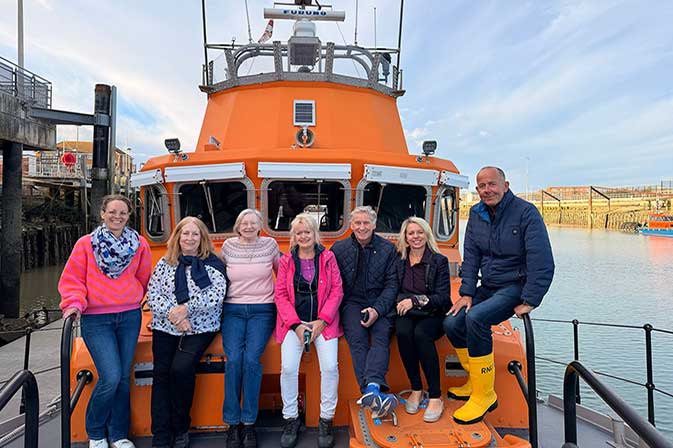
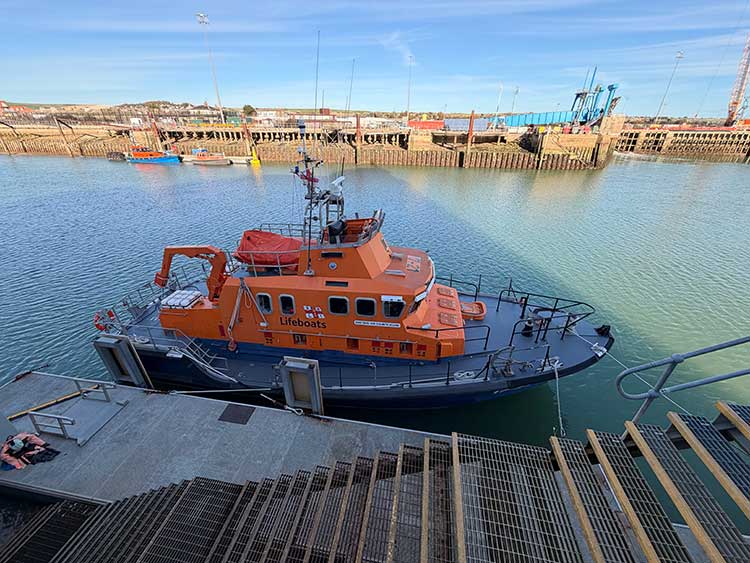
Members of Newhaven Chamber enjoyed a fascinating tour of Newhaven’s RNLI lifeboat station on October 8th, 2026, getting a close-up look at the people, preparation and specialist equipment behind the service.
The visit offered much more than a look around the boat. RNLI crew members and volunteers explained how callouts are coordinated, how the lifeboat is operated and maintained, and the dedication involved in keeping a volunteer rescue service ready to respond.
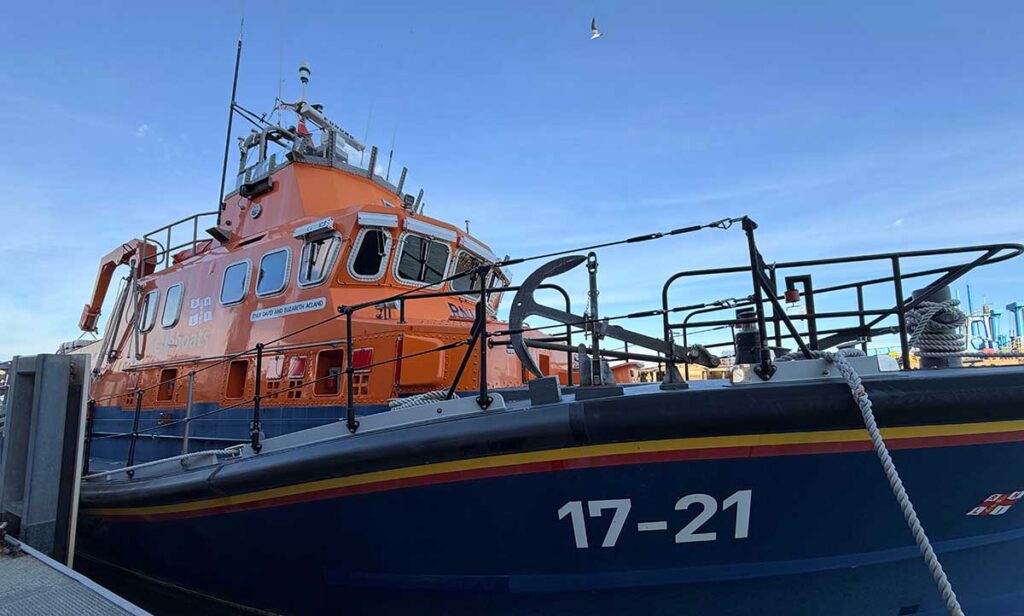
A skilled crew, ready to respond
The lifeboat usually goes out with six to eight crew members and needs at least five to launch. Some roles require specific qualifications: the boat needs a coxswain, navigator and mechanic, as well as a crew member. The coxswain leads the operation, while the navigator and mechanic each have important responsibilities during a rescue.
Visitors heard how a call is assessed and passed to the station. Crew members may need to travel in, get dressed in safety gear and receive a briefing before departure, so the process takes time, even when every minute matters. The tour also highlighted how the team’s availability can vary: crew members carry pagers and may be called from home or work.
The station’s crew is a mix of volunteers, with women making up at least 30% of the crew, according to the tour. The group also learned that many crew members join without previous maritime experience and develop their skills through training.
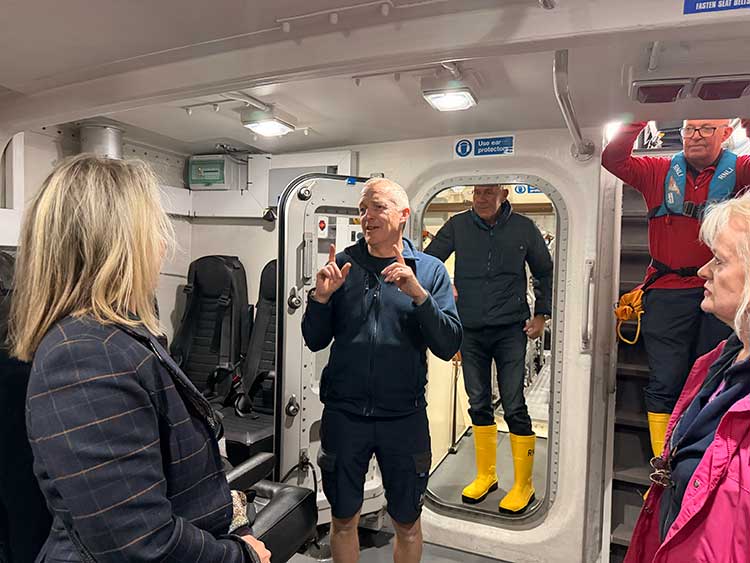
Inside the lifeboat
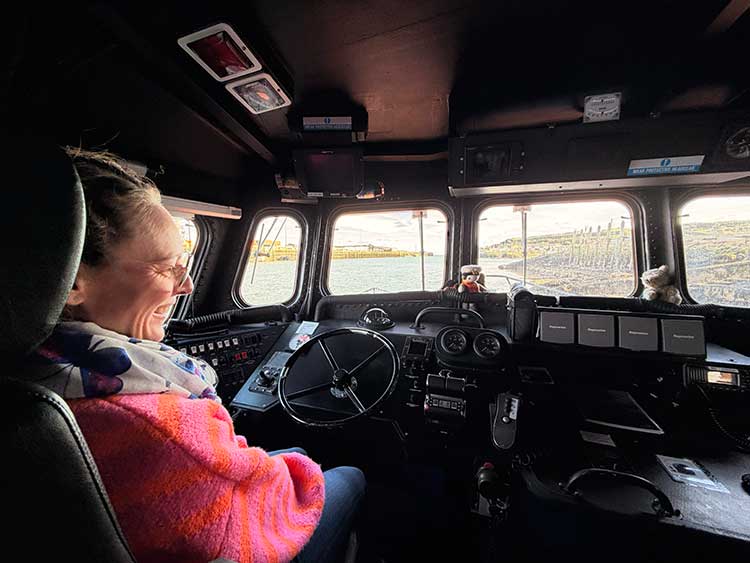
On board, the group saw the crew’s seats and harnesses, the wheelhouse and the equipment used to navigate and communicate. The coxswain oversees the overall situation, while the navigator uses a combination of radar, electronic navigation equipment and paper charts. To maintain a backup record, the navigator marks the vessel’s position on the paper chart every 30 minutes.
The tour continued below deck, where visitors saw the space that can be used to carry casualties if needed, along with safety equipment and storage. Crew members explained that this is not generally the preferred place for people being rescued, but it provides another option when circumstances require it.
Power, performance and backup systems
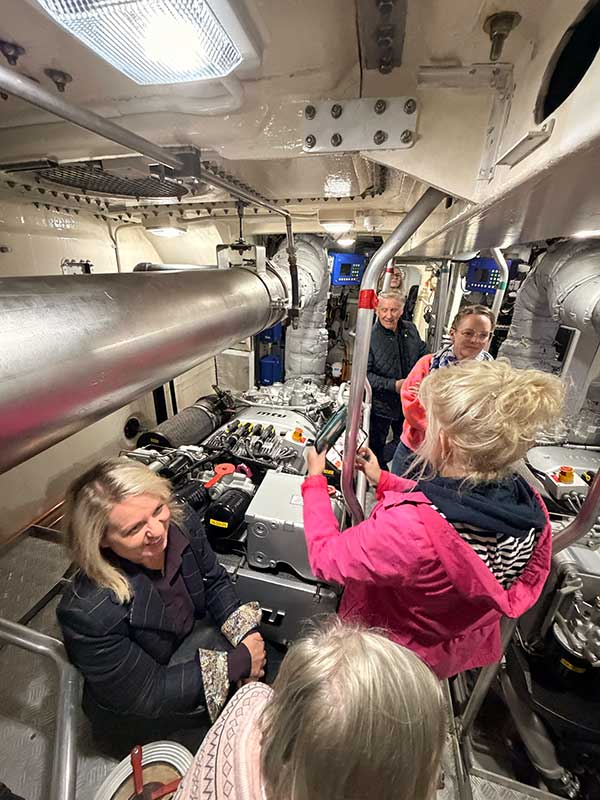
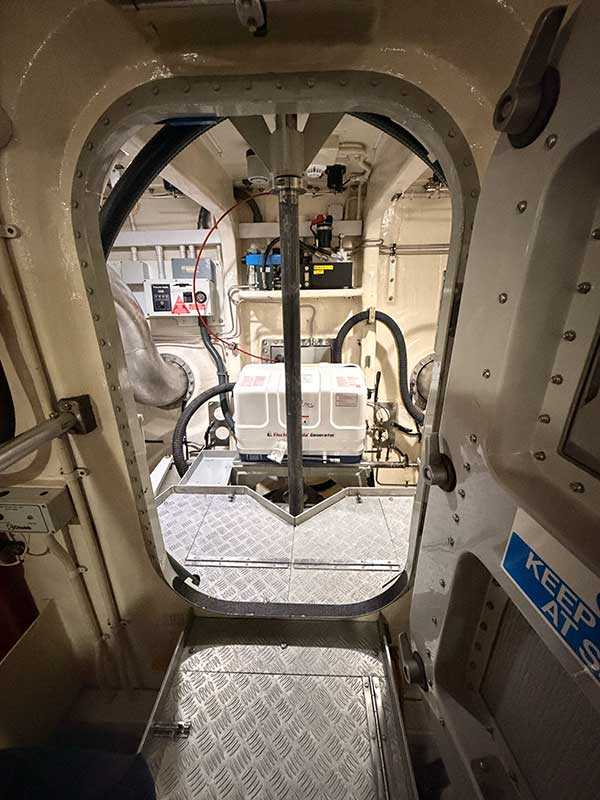
The boat is about 17 metres long and weighs more than 40 tonnes. It has two 1,600-horsepower engines and can reach around 25 knots. The crew explained how having duplicate systems, including engines and fuel arrangements, helps the boat keep operating if a problem affects one part of the setup.
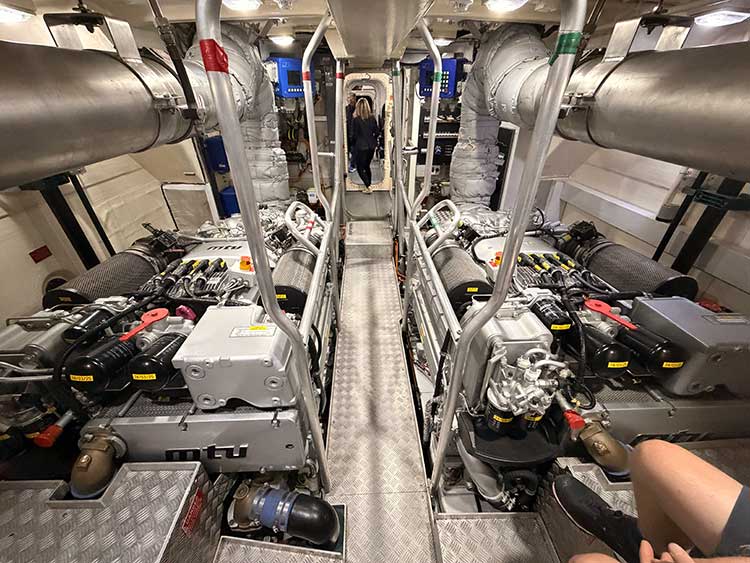
The scale of the vessel also comes with significant running costs. Its fuel capacity is around 5,400 litres, and the crew described how a typical couple of hours at sea can use roughly 500 litres. Maintenance, fuel and the specialist equipment needed to keep the boat ready all contribute to the cost of providing a rescue service.
The station also has a smaller, five-metre D-class inflatable boat, which can be useful for incidents such as people being cut off by the tide. It needs fewer crew members and uses much less fuel than the larger lifeboat, making it a practical choice when conditions and the task allow.
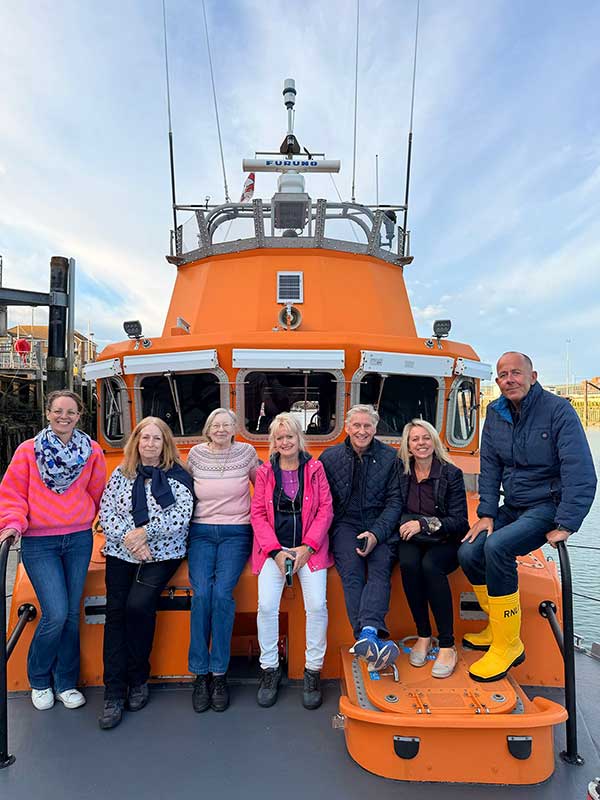
A service powered by volunteers and donations
A key message from the visit was the scale of the RNLI’s volunteer contribution. Members was told that around 97% of the RNLI’s workforce are volunteers, and that crew members give substantial time to training, callouts and other station activities alongside their jobs and family lives.
The RNLI is funded by donations there is no government funding. Tour hosts described the organisation’s annual running costs as approximately £180 million, helping put the expense of maintaining boats, stations and trained crews into perspective.
The station is also looking at ways to reduce its environmental impact where possible. The group heard about waste oil being collected for reuse and sustainability work that considers alternatives while keeping safety and performance central.
Thank you, Newhaven RNLI
The tour gave Newhaven Chamber members a greater appreciation of what happens behind the scenes at the lifeboat station: the training, technical maintenance, teamwork and readiness that support the RNLI’s rescue work. It was an engaging and memorable visit, and a chance to thank the crew and volunteers who give so much to help keep others safe at sea.